Free Government Tablet in Indiana: 2026 Eligibility and Safe Application Options
Indiana residents can check free or discounted tablet options, but the safest path starts with the facts. In 2026, tablet access usually depends on Lifeline-related provider offers, Hoosier Works EBT or Medicaid eligibility, income proof, provider coverage, device stock, shipping rules, activation terms, and local digital access resources.
Quick Answer for Indiana Residents
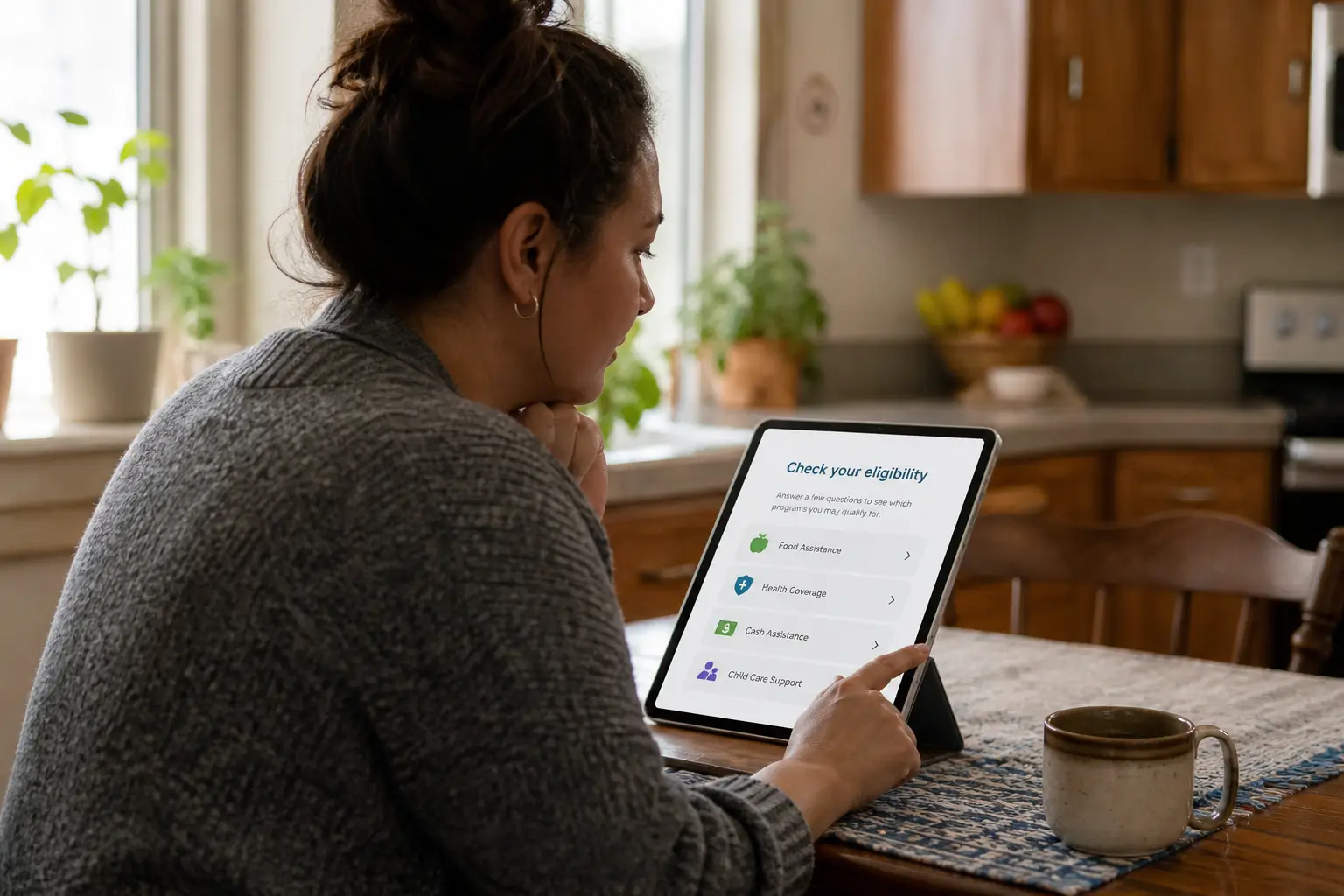
If you live in Indiana and searched for a free government tablet, start here: there is no guaranteed federal or Indiana tablet giveaway for every eligible household. The safer route is to check whether your household qualifies for Lifeline, then confirm whether any participating provider has a tablet or discounted device offer for your exact ZIP code.
SNAP through Indiana’s Division of Family Resources, the Hoosier Works EBT card, Indiana Medicaid programs, SSI, housing assistance, veterans benefits, qualifying Tribal assistance where applicable, and income eligibility may help prove that you qualify. They do not automatically ship a tablet to your home.
The provider controls the device offer. Your county, rural road address, apartment building, shelter address, college housing, farm community, Ohio River town, Northwest Indiana metro area, Indianapolis address, device stock, activation rule, shipping rule, and any required copay can all affect what you see.
Best first step
Identify your eligibility path through SNAP, Hoosier Works EBT, Medicaid, SSI, income, housing assistance, veterans benefits, or another accepted program.
Best Indiana check
Use your exact ZIP code and service address. Provider options can differ between Indianapolis, Fort Wayne, South Bend, Evansville, Gary, Bloomington, and rural counties.
Best safety rule
Never share your Hoosier Works EBT PIN, FSSA account login, bank login, gift card payment, or full benefit account access with a site promising a free tablet.
What “Free Government Tablet” Means in 2026
The phrase “free government tablet” is popular, but it can be misleading. Most Indiana residents are not applying for a tablet directly from the state or federal government. They are usually checking whether they qualify for a phone or internet service discount and whether a private participating provider has a tablet, phone, SIM, or discounted Android device offer available.
The Affordable Connectivity Program, ACP, has ended. Households stopped receiving ACP discounts on June 1, 2024. During ACP, some providers offered a one-time device discount for a laptop, desktop computer, or tablet. That ACP device path is not active for new 2026 tablet applications.
Lifeline is different. Lifeline remains active and mainly lowers the monthly cost of phone, internet, or bundled service. It does not guarantee that every eligible Indiana applicant receives a tablet. Any tablet offer must be confirmed with the provider serving your address.
| Term | What it means | What Indiana residents should know |
|---|---|---|
| ACP | A federal broadband affordability program that ended. | Do not trust pages claiming active “ACP tablet 2026” enrollment. |
| Lifeline | A monthly discount for eligible phone, internet, or bundled service. | It helps with service costs, but it does not guarantee a tablet. |
| Provider tablet offer | A device offer from a participating company. | Availability depends on ZIP code, stock, coverage, device condition, shipping, activation, and provider rules. |
| Hoosier Works EBT | Indiana’s EBT card used for SNAP and TANF benefits. | It can support eligibility proof, but the card itself is not a tablet voucher. |
| Local digital access | Help from libraries, assistive technology resources, community agencies, or broadband programs. | This can matter if no provider tablet offer appears in your Indiana ZIP code. |
Does Indiana Have a Free Tablet Program?
There is no verified Indiana statewide program that guarantees a free tablet to every low-income resident in 2026. “Government tablet program Indiana” is a broad search phrase, not the official name of one universal tablet giveaway.
Indiana does have several state-specific resources that matter for this topic. SNAP benefits are handled through the Indiana Family and Social Services Administration, Division of Family Resources. Indiana uses the Hoosier Works EBT card for SNAP and TANF benefits. Indiana Medicaid includes programs such as the Healthy Indiana Plan for many adults, Hoosier Healthwise for children and pregnant individuals, Hoosier Care Connect for certain members with disabilities, Traditional Medicaid, and Indiana PathWays for Aging for eligible Hoosiers age 60 and older.
Indiana also has a Digital Opportunity effort through Indiana Broadband. The state’s digital opportunity work focuses on broadband access, digital skills, affordability, and the barriers that keep residents from using online services. That matters because a tablet is only useful when a household can also get a reliable connection, basic digital skills, and safe support.
Libraries are part of the local access picture. The Indiana State Library maintains public library resources, and the Indiana Digital Library is a consortium of more than 200 Indiana public libraries sharing digital OverDrive collections. Your local branch may offer public computers, Wi-Fi, printing, scanning, digital classes, job search help, or referrals.
For disability-related technology needs, the INDATA Project through Easterseals Crossroads is Indiana’s assistive technology resource. Its services include information and referral, device demonstration, device loans, reused computers, and equipment reutilization. For local low-income support, Indiana Community Action Agencies are listed through IHCDA and may help residents connect with services such as energy assistance, weatherization, and community referrals.
Lifeline
Best for residents who need lower phone or internet costs and want to check whether a provider also has a device offer.
Hoosier Works and Medicaid
Best for proving eligibility when automatic verification does not confirm your benefit record.
Libraries, INDATA, and Community Action
Best for alternatives if no tablet offer is available from a provider in your Indiana ZIP code.
Main Ways Indiana Residents May Qualify
Most Indiana residents qualify through either program-based eligibility or income-based eligibility. The exact path can depend on whether you are checking federal Lifeline, a wireless provider offer, a local device referral, or another digital access program.
Program-based eligibility
You may qualify if you, your child, or someone in your household participates in an accepted program such as:
- SNAP through Indiana FSSA and the Division of Family Resources
- Hoosier Works EBT tied to SNAP participation
- Indiana Medicaid, including Healthy Indiana Plan, Hoosier Healthwise, Hoosier Care Connect, Traditional Medicaid, or Indiana PathWays for Aging where applicable
- Supplemental Security Income, SSI
- Federal Public Housing Assistance, including Section 8
- Veterans Pension or Survivors Benefit
- Qualifying Tribal assistance programs if your household and location meet Lifeline rules
Income-based eligibility
You may also qualify by household income. Federal Lifeline uses income at or below 135% of the Federal Poverty Guidelines. Indiana is part of the 48 contiguous states table, not the Alaska or Hawaii table.
Indiana household examples
A parent in Indianapolis who receives SNAP may use that benefit as an eligibility path. A senior in Fort Wayne may qualify through Medicaid, SSI, income, or Indiana PathWays for Aging. A household in Evansville or a rural Ohio River county may need to check wireless coverage carefully before choosing a provider. A student in Bloomington may not qualify through student status alone, but household income or benefit participation may matter.
Only one federal Lifeline benefit is allowed per household. This matters in apartments, shared housing, shelters, student housing, and multi-family homes. If people live at the same address but do not share money or expenses, extra household proof may be needed.
EBT and SNAP Free Tablet Options in Indiana
SNAP is one of the clearest eligibility paths for many Indiana residents. People often search for “free tablet with EBT in Indiana” or “SNAP free tablet Indiana,” but the Hoosier Works EBT card itself does not give out a tablet.
Think of SNAP as proof that may help you qualify for Lifeline. After that, you still need to check whether a provider serving your ZIP code has a current tablet or discounted device offer.
Indiana’s Hoosier Works card works like a debit card for approved benefits, and it uses a four-digit PIN. Keep that PIN private. A real Lifeline or provider eligibility check should never ask for your EBT PIN.
If you need a broader explanation of EBT-based tablet eligibility, read the main site page on tablet options with EBT.
| If you have | How it helps | What it does not do |
|---|---|---|
| Hoosier Works EBT card | May show a connection to SNAP or TANF benefits in Indiana. | Does not guarantee a tablet, provider approval, or device stock. |
| SNAP approval notice | Can support program-based eligibility if automatic verification fails. | Does not replace the provider ZIP code and coverage check. |
| DFR county record | May help if you need proof from your local Division of Family Resources office. | An outdated county record or old address can slow manual review. |
| ConnectEBT account access | May help you manage your EBT balance and card information. | Do not share your login or PIN with tablet ads or unofficial sites. |
Indiana application problems often come from mismatched documents. If your SNAP notice has an old address, a name spelling issue, or a different county record, fix the benefit record first if possible. The document should clearly show your name, program, date, and current status.
Medicaid Free Tablet Options in Indiana
Indiana Medicaid can help prove eligibility for Lifeline or provider offers, but Medicaid does not directly mail tablets to every member. The tablet offer still depends on a participating provider, device stock, ZIP code coverage, and the provider’s rules.
Indiana Medicaid includes several named programs. The Healthy Indiana Plan serves many qualified adults ages 19 to 64. Hoosier Healthwise serves children and pregnant individuals. Hoosier Care Connect serves certain members with disabilities. Traditional Medicaid covers members not enrolled in managed care. Indiana PathWays for Aging serves eligible Hoosiers age 60 and older.
If the eligibility system cannot verify your Medicaid status automatically, you may need a current eligibility letter, approval notice, managed care enrollment notice, or other official proof. Make sure the document shows your name, active coverage, and date clearly.
Lifeline Tablet and Phone Options in Indiana
Lifeline helps eligible households lower the monthly cost of phone, internet, or bundled service. It is mainly a service discount. Some providers may offer a phone, SIM card, tablet, or discounted Android device with service, but that device offer is controlled by the provider.
Indiana residents can use the National Verifier unless directed otherwise by official Lifeline instructions. After eligibility is approved, the household must connect with a participating phone or internet company to receive the benefit. Indiana’s OUCC also points residents toward USAC’s provider search for participating Lifeline companies.
How Lifeline connects to tablet offers
- You check whether your household qualifies through benefits or income.
- You complete the official Lifeline eligibility process or follow a provider’s official route.
- You search participating companies by ZIP code or exact service address.
- The provider explains service plans, coverage, device offers, activation rules, and current stock.
- You confirm whether any tablet is free, discounted, refurbished, limited-stock, or tied to a copay.
For a safer general path, read how to apply. For service and device basics, see Lifeline phone and tablet options.
Documents You May Need
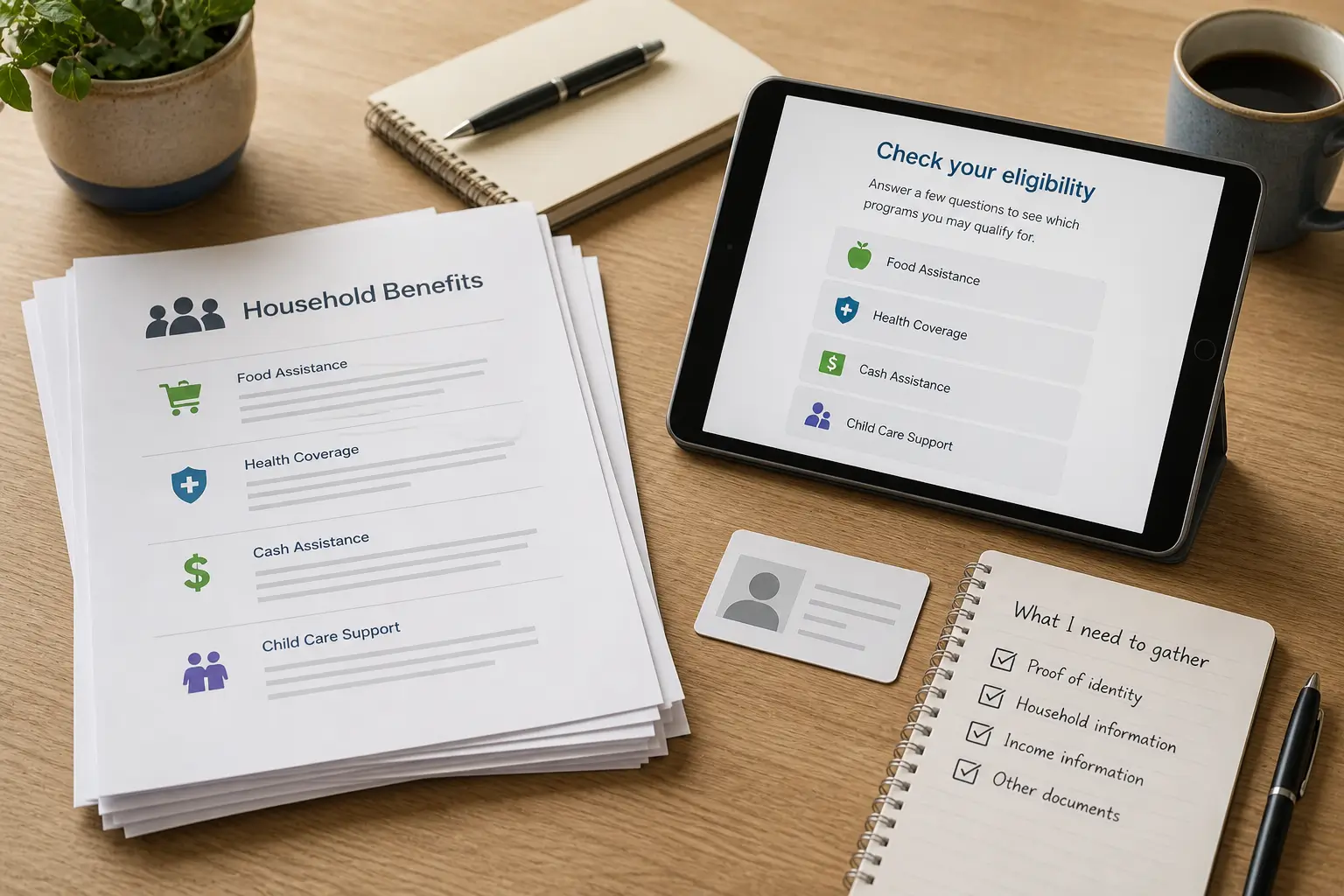
Document problems are one of the biggest reasons applications get delayed. Indiana applicants should prepare clear, current proof before starting. This is especially important if your SNAP, Hoosier Works EBT, Medicaid, DFR office record, or physical address information recently changed.
| What you may need to prove | Common examples | Indiana-specific mistake to avoid |
|---|---|---|
| Identity | Indiana driver’s license, Indiana ID, passport, birth certificate, military ID, or another accepted identity document. | Uploading a blurry photo where your name or date of birth cannot be read. |
| SNAP eligibility | SNAP approval notice, DFR benefit letter, or current proof tied to your Hoosier Works EBT card. | Uploading only an EBT card photo and sharing your PIN. Never share your EBT PIN. |
| Medicaid eligibility | Indiana Medicaid eligibility notice, Healthy Indiana Plan proof, Hoosier Healthwise notice, Hoosier Care Connect notice, or Indiana PathWays proof. | Using only a health plan card if it does not clearly show active Medicaid eligibility. |
| Income | Pay stubs, tax return, unemployment statement, Social Security statement, pension statement, or other accepted income proof. | Sending only one partial pay stub when the application asks for a full income period. |
| Address | Utility bill, lease, benefit notice, shelter letter, school document, or other accepted address proof. | Using a mailing address only when the provider needs a physical Indiana service address. |
| Household status | Household Worksheet or other proof if another Lifeline applicant lives at the same address. | Assuming every person in one shared apartment, shelter, or household can receive a separate benefit without proof. |
| Tribal eligibility | Official proof of qualifying Tribal program participation or qualifying Tribal land status if applicable. | Claiming Tribal eligibility without confirming that the Lifeline Tribal rules apply to your household and location. |
For a full document breakdown, see the main site page on government tablet documents.
Step-by-Step Application Path
Use this practical path if you are checking free or discounted tablet options in Indiana. It keeps the process safer and helps you avoid fake application sites.
1. Pick your eligibility path
Use SNAP, Hoosier Works EBT, Medicaid, SSI, income, housing assistance, veterans benefits, qualifying Tribal assistance, or another accepted path.
2. Gather documents first
Prepare proof of identity, eligibility, address, and household status. Save current FSSA, DFR, SNAP, or Medicaid notice details if you recently applied for benefits.
3. Use official Lifeline routes
Use Lifeline Support, the National Verifier, USAC provider search, or a participating provider. Do not start with a random ad that asks for an EBT PIN, gift cards, or bank login.
4. Watch for document requests
If the application is pending, read the request carefully. Upload the exact proof requested, not extra unrelated documents.
5. Search providers by ZIP code
Compare companies for your exact Indiana address. Indianapolis, Fort Wayne, Evansville, South Bend, Gary, Bloomington, Lafayette, Muncie, rural counties, and river towns can show different results.
6. Confirm tablet terms
Ask whether a tablet is available, whether it is new or refurbished, what type of device may ship, and whether there is any copay, shipping fee, activation step, or usage rule.
Provider Availability and ZIP Code Checks
Indiana is not one simple coverage area. Provider availability can look different in Indianapolis, Fort Wayne, South Bend, Evansville, Gary, Hammond, Lafayette, Bloomington, Terre Haute, Muncie, rural southern Indiana, Hoosier National Forest communities, and small towns along the Ohio River.
ZIP code checks matter because wireless signal, broadband availability, address eligibility, provider enrollment areas, shipping rules, and device stock can vary. A provider that works well in a dense Indianapolis neighborhood may not be the best choice on a rural road in Orange County, Perry County, Switzerland County, or another lower-density area.
| What to check | Why it matters in Indiana | Question to ask |
|---|---|---|
| Exact service address | Apartments, rural roads, shelters, student housing, and farm addresses may show different service results. | Do you provide Lifeline service at my exact address? |
| Network quality | Coverage can differ between metro areas, rural counties, wooded regions, and Ohio River communities. | Which network does the service use where I live? |
| Tablet stock | Device inventory can change quickly and may vary by ZIP code. | Is a tablet actually available for my ZIP code today? |
| Device condition | Some devices may be refurbished, basic Android models, or limited-stock units. | Is the device new or refurbished, and what type of tablet may ship? |
| Total cost | Some offers may include a copay, shipping fee, activation rule, or monthly usage requirement. | What is the total amount I must pay before receiving the device? |
Use the main site page on government tablet options near you to understand why local provider checks matter. If you are comparing device expectations, read the guide to basic government Android tablet options.
What To Do If No Tablet Offer Is Available
If no provider tablet offer is available in your Indiana ZIP code, do not assume you failed. It may simply mean the provider has no device stock, no tablet promotion, no shipping option, or no service at your address.
Try Lifeline service first
A discounted phone or internet service plan may still help you make calls, receive texts, check FSSA notices, manage Medicaid information, search for jobs, complete school forms, attend telehealth visits, and stay connected while you look for a tablet.
Ask your local library
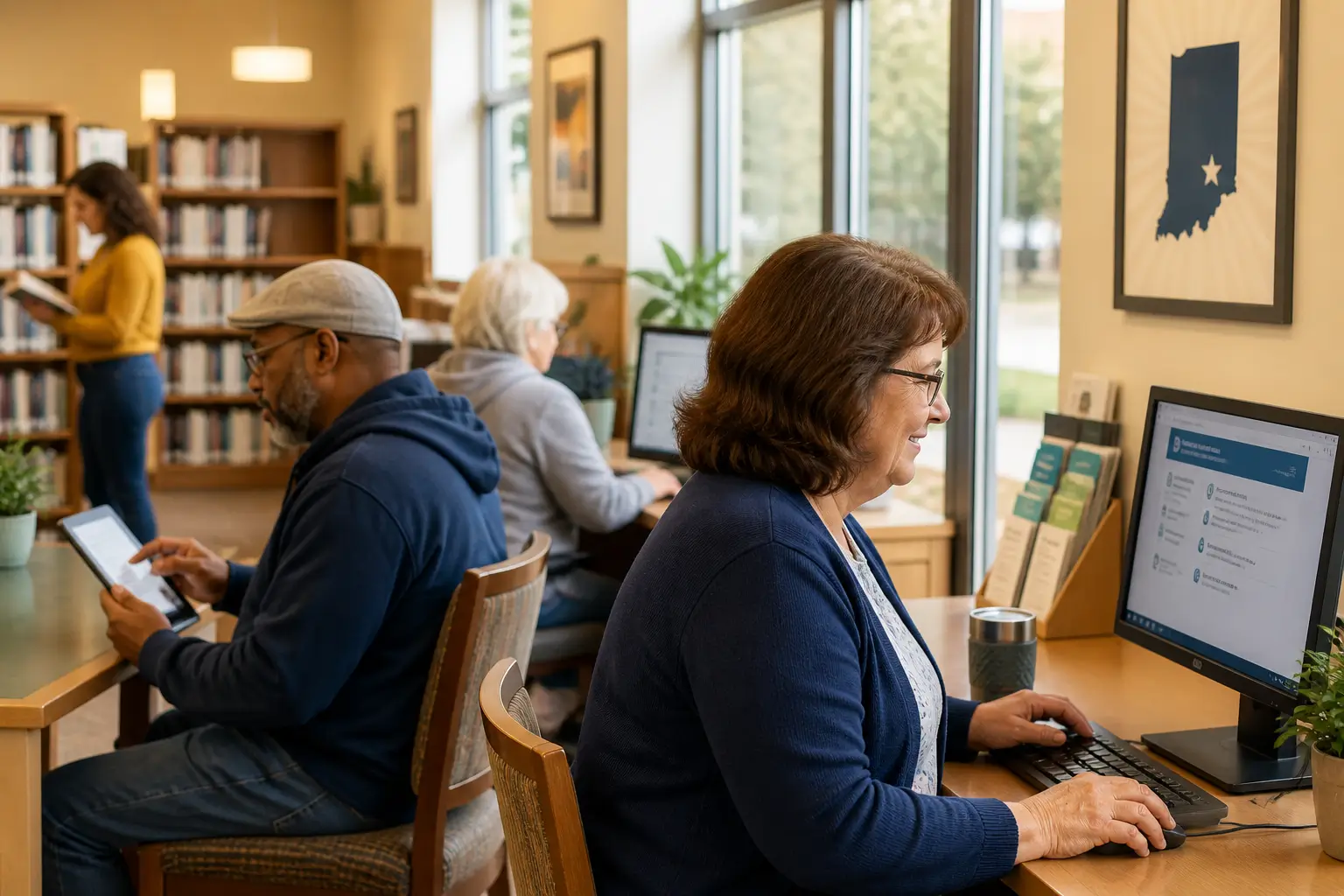
Indiana public libraries often provide public computers, Wi-Fi, printing, scanning, online resources, digital classes, job search support, and help using basic technology. The Indiana State Library directory can help residents find local library systems, and the Indiana Digital Library connects many public libraries through shared digital collections. Call your branch before visiting because services vary by city and county.
Check INDATA for disability-related technology needs
If your device need is connected to disability, communication, vision, hearing, learning, mobility, independent living, or daily tasks, the INDATA Project may be worth checking. INDATA offers assistive technology information, device demonstrations, device loans, reused computers, and equipment reutilization. This is not the same as a free consumer tablet, but it can help Hoosiers who need technology for access and independence.
Contact a Community Action Agency
Indiana Community Action Agencies may not hand out tablets, but they can connect low-income households with local support. These agencies often work around energy assistance, weatherization, poverty support, emergency needs, and referrals. If your tablet search is part of a bigger problem, such as unpaid utilities, loss of internet, housing stress, or job search barriers, a Community Action Agency may know where to start locally.
Look for safe low-cost alternatives
If you need a device quickly, compare safe refurbished tablets, school or library resources, nonprofit reuse programs, and trusted local referrals. Avoid sellers or “benefit agents” who ask for gift cards, wire transfers, cryptocurrency, EBT PINs, or payment before showing clear device terms.
Special Groups in Indiana
Seniors
Indiana seniors may qualify through Medicaid, Indiana PathWays for Aging, SSI, SNAP, income, housing assistance, or other accepted paths. A tablet can help with telehealth, prescription refills, video calls, transportation apps, online benefit notices, and family contact. Seniors should confirm screen size, charger availability, customer support, device condition, and whether the plan has enough data for daily use. For more senior-focused help, visit tablet options for seniors.
Veterans
Some Indiana veterans may qualify through Veterans Pension, Survivors Benefit, SNAP, Medicaid, housing assistance, or income. Keep official benefit documents clear and current. If a provider asks for proof, upload only documents that show the required eligibility information. For more details, see tablet options for veterans.
Families with SNAP or Hoosier Works EBT
Families using the Hoosier Works EBT card may need internet or a device for school portals, child care forms, benefit renewals, job applications, medical appointments, and county notices. SNAP can support eligibility, but a provider must still confirm any tablet offer. Do not share your EBT PIN with anyone offering a tablet.
Medicaid households
Indiana Medicaid households may include children, parents, seniors, people with disabilities, pregnant applicants, caregivers, and low-income adults. Keep current Medicaid proof ready. If your case is under review or your address recently changed, update your benefit record before starting a provider application if you can.
Rural residents
Rural Indiana residents may face different issues than residents in Indianapolis, Fort Wayne, South Bend, or Evansville. Service coverage, shipping, local pickup, library hours, and broadband quality can vary in wooded areas, farm communities, southern Indiana counties, and Ohio River towns. Always check your exact service address, not just your county name.
Students and adult learners
Low-income students, adult learners, GED students, community college students, job trainees, and English learners may need a device for coursework and applications. Lifeline eligibility usually depends on household benefits or income, not student status alone. Libraries, schools, workforce centers, and local agencies may have better local referrals if no provider tablet is available.
Hoosiers with disabilities
Residents with disability-related technology needs should check both service discounts and assistive technology resources. A general tablet offer may not include accessibility support, while INDATA may help with device demonstrations, equipment loans, reused computers, or referrals for assistive technology needs.
Scam Warnings for Indiana Residents
Public-benefits scams often target people who need help fast. Be careful with websites, text messages, social media posts, calls, or popups that make tablet approval sound automatic.
- Never share your EBT PIN. A Lifeline or tablet eligibility check does not need it.
- Do not share your FSSA account login, Medicaid portal login, banking login, or full benefit account access.
- Do not pay with gift cards, cryptocurrency, wire transfer, or payment apps to unlock a tablet.
- Do not trust ACP tablet claims for 2026. ACP ended and is not an active new tablet path.
- Check whether the company is a real Lifeline provider before uploading ID documents.
- Read the provider’s device terms before agreeing to shipping, activation, or plan rules.
- Be careful with callers or texters who claim Indiana will send direct grant money or devices if you provide financial information.
Free Tablet Apply is independent and informational only. It does not issue tablets, approve Lifeline applications, represent the government, or decide provider availability. Read the site disclaimer at Free Tablet Apply Disclaimer.
Helpful Checklist Before You Apply
Use this checklist before starting an Indiana Lifeline or tablet-related application.
- I understand ACP ended and households stopped receiving ACP discounts on June 1, 2024.
- I understand federal Lifeline mainly helps with phone or internet service.
- I have checked whether I qualify through SNAP, Hoosier Works EBT, Medicaid, SSI, income, housing assistance, veterans benefits, qualifying Tribal assistance, or another accepted path.
- I have a clear photo or scan of my Indiana ID or another accepted identity document.
- I have current SNAP, Medicaid, SSI, housing, veterans, income, or Tribal program proof if needed.
- I have saved current FSSA, DFR, or Medicaid notice information if I recently applied for Indiana benefits.
- I have a physical service address, not only a mailing address.
- I understand only one Lifeline benefit is allowed per household.
- I have checked providers by exact ZIP code and address.
- I have asked whether the device is new, refurbished, basic Android, or limited-stock.
- I have confirmed any copay, shipping cost, activation rule, return policy, and monthly usage requirement.
- I have not shared my EBT PIN, bank login, FSSA login, or unnecessary personal information.
FAQs About Free Tablets in Indiana
Can I get a free government tablet in Indiana in 2026?
You may be able to find a free or discounted tablet offer, but Indiana does not have one guaranteed tablet program for every eligible resident. Check Lifeline eligibility, then confirm any device offer by your exact ZIP code.
Does Hoosier Works EBT qualify me for a tablet in Indiana?
Hoosier Works EBT may help show SNAP or TANF participation, which can support Lifeline eligibility. It does not automatically guarantee a tablet. A provider must still confirm service, stock, device terms, shipping, and any required copay.
Can I use my Hoosier Works card as proof?
Your Hoosier Works card may show a connection to Indiana benefits, but many applications need a current SNAP approval notice or benefit document. Never share your EBT PIN with anyone offering a tablet.
Can Indiana Medicaid help me get a tablet?
Indiana Medicaid can be used as an eligibility path for Lifeline. A tablet may be available only if a participating provider serving your address has a current device offer.
Is the Healthy Indiana Plan a tablet program?
No. The Healthy Indiana Plan is an Indiana Medicaid program for qualified adults. It may help with eligibility proof, but it does not guarantee that a tablet will be provided.
Is ACP still available for Indiana tablet applications?
No. ACP ended, and households stopped receiving ACP discounts on June 1, 2024. Be careful with websites that still advertise active ACP tablet applications for 2026.
Why do tablet offers change between Indianapolis and rural Indiana?
Provider service areas, wireless coverage, broadband access, shipping rules, and device stock can vary by address. A provider available in Indianapolis or Fort Wayne may not offer the same option in a small town or rural county.
Do I need to visit a DFR office to apply for Lifeline?
Not usually. Lifeline has its own eligibility process. A DFR office may help with SNAP or benefit records, but Lifeline approval and provider enrollment follow official Lifeline and provider steps.
Can seniors in Indiana qualify for tablet options?
Yes, seniors may qualify through Medicaid, Indiana PathWays for Aging, SNAP, SSI, income, housing assistance, or other accepted paths. Seniors should also check local libraries, Community Action Agencies, and INDATA if disability-related technology support is needed.
Can two people at the same Indiana address each get Lifeline?
Only if they are separate households under Lifeline rules. If they live together but do not share income or expenses, they may need to complete a household worksheet or provide extra proof.
What if my Indiana benefit document has an old address?
Update your benefit record before applying if possible. Address mismatches can slow down verification, especially when a provider needs a physical service address for coverage and shipping.
Who can help me locally if no tablet offer is available?
Your local public library, Community Action Agency, INDATA resource, school, workforce center, senior center, disability support organization, or community nonprofit may be able to offer referrals, computer access, device help, or digital skills support.
Final Helpful Summary
A free government tablet in Indiana is not guaranteed in 2026. The real path is more careful: check Lifeline eligibility, use official verification steps, search providers by exact ZIP code, and confirm any tablet offer before sharing sensitive information.
If you receive SNAP, use the Hoosier Works EBT card, receive Indiana Medicaid, receive SSI, have housing assistance, receive veterans benefits, meet the income limit, or qualify through another accepted path, you may have a strong eligibility route. If no tablet offer is available where you live, check local alternatives such as public libraries, INDATA, Community Action Agencies, Indiana Broadband resources, and safe low-cost refurbished devices.
For more help across the site, visit Free Tablet Apply, read the application steps, compare provider options, or browse more public-benefits explainers on the blog. You can also review who runs the site on the about page or ask a question through the contact page.
External Resources
Use these official or trusted resources to verify program rules before applying. External links are listed here only so the main article stays focused and easy to read.
- FCC Affordable Connectivity Program status
- FCC Lifeline consumer information
- Official Lifeline Support website
- Lifeline eligibility rules
- National Verifier application path
- USAC Companies Near Me tool
- Indiana OUCC Lifeline information
- Indiana OUCC participating Lifeline companies information
- Indiana FSSA SNAP food assistance
- Indiana Hoosier Works EBT card information
- Indiana Medicaid member programs
- Healthy Indiana Plan
- Indiana Broadband Digital Opportunity
- Indiana State Library public library directory
- Indiana Digital Library
- INDATA assistive technology services
- Indiana Community Action Agencies